Needlepoint Background Stitches
Stitch School Volume 1
$24.00 for 1 year
Sign-up fee: $19.00
$24 for the book — the complete PDF to download and keep, plus a full year of access to the video lessons for all 45 stitches. After the first year you can choose to extend your video access year by year for $5 per year.
Description
See a sample before you buy
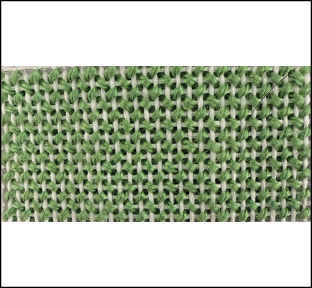
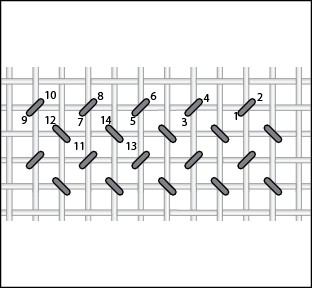
This is the T-Stitch, the first of the 45 needlepoint background stitches in the book. Every one of the 45 stitches is presented exactly this way — a photograph of the finished stitch, a clear chart, and a video lesson showing it worked.
45 needlepoint background stitches, charted and taught on video
Stitch School: Background Stitches Volume 1 is a complete working reference for the stitches that fill the space around your design — the part of a canvas that can take the longest and teach you the most.
Every stitch in the book gets three things: a clear chart, a photograph of the finished stitch so you know what you are aiming for, and a video lesson showing it worked stitch by stitch. Read the chart at your frame. Watch the video when a stitch doesn’t behave.
From the publishers of Needlepoint Now — part of the needlepoint community for over 26 years, with thousands of stitches charted and published.
How the book and the videos work together
The book is a PDF you download and keep. Print the pages you are working from, or read it on a tablet beside your frame.
Each chart links directly to its video lesson on this site. When you reach a stitch you have not worked before, one tap takes you to someone stitching it — no hunting through a video library, no guessing whether you have read the chart correctly.
That connection is the whole point of the series. A chart tells you where the needle goes. A video shows you how it should look while you are doing it.
What’s included
- The complete digital book — 45 needlepoint background stitches, charted and photographed
- A video lesson for every stitch in the book
- A full year of access to the video lessons — included, not sold separately
- Download your copy any time during your first year; once saved, the book is yours to keep
The book is $24. That one price includes the complete PDF to download and keep, and a full year of access to the video lessons for every stitch in it. The book and the videos come together — there is no separate purchase for either.
After the first year, you can choose to extend your access to the videos on a year-by-year basis for $5 per year. You will have the option to make that choice when your first year subscription is completed.
The 45 needlepoint background stitches in this volume
Small stitches — T-Stitch, Skipped Tent, 4-Way Continental, Mosaic, Alternating Mosaic, Diagonal Mosaic, 1-1-2 Woven, Upright Cross, Reverse Basketweave, Alicia’s Lace, Horizontal Skipped Brick Variations, Woven, Double Brick with Xs, Diagonal Cashmere, Skipped Mosaic Variations
Medium stitches — Nobuko, Alternating Nobuko, Double Woven, Hungarian, Single V Stitch, Large Cross and Upright Cross, Large Cross and Double Upright Cross, Criss-Cross Hungarian, Offset Brick with Crosses, Hungarian with Crosses, Hungarian and Straight, Box Joined, Tramés with Smyrna, Double Parisian, Framed Pavillion Variation, Scallop with Eyelet Variation
Large stitches — Eyelet and Cross Variation, Scotch Tent Variation, Chevron with Smyrna, Star Octagon Expanded, Framed Upright Cross, Double Hungarian, Open Diamonds, Tweed, Bargello Swing, Wave Diamond Pattern, Wide Diamond, Star Octagon Variation, Algerian Eyelet Variation, Vertical Woven Variation
Who it’s for
If you have finished a canvas in basketweave and wondered what else a background could be, needlepoint background stitches are where to start. The stitches range from quick fills you can work while talking to textured patterns worth taking your time over.
More volumes are on the way — see the full Stitch School series. You do not need to work through it in order. It is a reference — find the stitch that suits the space you are filling, read the chart, watch the video, and stitch.
What you need to stitch needlepoint background stitches
None of the 45 needlepoint background stitches in this volume ask for unusual equipment. If you already stitch canvas, you almost certainly own everything on this list. If you are arriving from cross stitch or surface embroidery, this is the short version of what to gather before you start.
The basic kit
- Canvas — hand-painted, or blank for counted stitching.
- Needles — tapestry, chenille and beading are the three types used in needlepoint.
- Stretcher bars — keep the canvas taut while you work.
- Tacks or staples — attach the canvas to the stretcher bars.
- Threads — cottons, cotton blends, wools and silks, in a range of textures.
- A laying tool — lays the thread flat on the canvas.
- Sharp scissors — for clean cuts, so threads do not fray as you start and finish.
- A magnet or needle minder — holds the needle on the canvas when you are not stitching.
- Good light — makes the canvas far easier to read, particularly on higher mesh counts.
- A threader — for getting thread through a small eye.
- A project bag — keeps each project’s supplies together.
- A stitch guide — tells you which stitch belongs where on a painted canvas.
Needles and needle sizes
Tapestry needles are the most common type for needlepoint. They have a large eye and a blunt point, so they slide between the canvas threads instead of piercing them. This is the needle you will reach for on nearly every stitch in the book.
Chenille needles are used for ribbon work, and for stitches that need to pierce the canvas rather than pass beside it.
Beading needles come in long and short lengths and have a very fine eye, so they will pass through a bead.
Matching the needle to the canvas matters more than it sounds. This is the pairing we use:
| Needle size | Canvas mesh |
|---|---|
| 16 | 8–10 mesh |
| 18 | 10–12 mesh |
| 20 | 12–14 mesh |
| 22 | 14–18 mesh |
| 10 | Beading |
A quick test when you are unsure: drop a needle into a canvas hole. If it falls through on its own, it is fine to use.
When you are caught between two sizes, go one size larger. The bigger needle opens the hole just enough to ease the thread through without friction, and less friction means less stress on the thread — which shows in the finished surface.
Canvas and mesh counts
Needlepoint canvases generally run from 10 to 18 mesh. The mesh count is simply the number of holes per inch, so a lower number means larger holes and a more open ground. The needlepoint background stitches in this volume are charted to work across that entire range.
The most common ground is white mono canvas, though canvas comes in several forms. Whichever you choose, stretcher bars earn their keep: a taut canvas keeps your tension consistent and stops the canvas distorting as you work, which makes blocking and finishing far easier at the end.
Getting a background to sit right
Start in the top center. When you are filling a background area, begin at the top center of that area rather than at a corner. Working outward from the middle keeps the pattern symmetrical and balanced, so the repeat lands evenly on both sides instead of drifting.
Keep your thread short. Sixteen to twenty-four inches is the working range. Longer threads pass through the canvas too many times; they wear thin, lose their sheen, and eventually shred.
Expect to see some canvas. Most needlepoint background stitches are open stitches by design — they let the ground show through, and that is part of the texture. Bright thread on a bare white canvas will make that showing-through look stark.
On a painted canvas the effect is quite different. Your threads will be the shade of the canvas beneath them, or very close to it, so the canvas that peeks through reads as depth rather than as a gap. This is why a stitch that looks harsh on a blank sampler can look beautiful on a painted piece.
Plan for compensation. Backgrounds rarely divide neatly into whole repeats. Where a full stitch will not fit against an edge or a painted shape, you work a partial one — a compensation stitch. Every one of the needlepoint background stitches here can be compensated; seeing it done on video is usually quicker than reading about it.
Mount it before you start. Stretcher bars come in a range of sizes to fit any canvas, and tacks or staples hold the canvas square against them. A canvas worked in the hand distorts as the tension pulls it, and a distorted canvas is a great deal harder to block back into shape when you reach the finishing stage. Half an hour spent mounting at the beginning is the cheapest insurance in needlepoint.
Work the background last, but plan it first. Most stitchers finish the painted motifs before filling in around them. Even so, it is worth deciding which of the needlepoint background stitches you intend to use before the first stitch goes in, because the scale of the background is what sets the scale of everything else.
Choosing a background stitch for your canvas
With 45 options in front of you, the question stops being how to work a stitch and becomes which one to pick. The book groups the needlepoint background stitches into small, medium and large for exactly this reason — the size of the repeat is usually the deciding factor.
Small stitches sit close to the scale of basketweave. They cover densely, hold fine detail, and are the safe choice when the background area is narrow, awkwardly shaped, or broken up by the painted design. T-Stitch, Mosaic and Skipped Tent all behave well in tight spaces.
Medium stitches are where most backgrounds land. The repeat is big enough to read as texture from across the room, but small enough to compensate cleanly at an edge. Nobuko and the Hungarian family are the classic examples.
Large stitches want room. On a generous open background they are spectacular and they work up quickly, but they need enough uninterrupted canvas to show a full repeat — otherwise you spend the whole area compensating and the pattern never appears.
Mesh count pulls in the same direction. The same stitch worked on 18 mesh is roughly half the physical size it would be on 10 mesh, so a large stitch on fine canvas may read as medium, and a small stitch on coarse canvas can look surprisingly bold.
Thread choice is the last variable. A matte wool fills the canvas and mutes the pattern; a silk or a stranded cotton laid flat catches the light and sharpens it. If you are undecided, stitch a small square of the pattern on a scrap of the same mesh in the thread you plan to use. Ten minutes there saves an evening of reverse stitching.
A glossary of needlepoint terms
The vocabulary trips up more new stitchers than the stitches do. These are the terms used throughout the book.
Bargello — a type of needlepoint made of upright flat stitches laid in a mathematical pattern to create a motif.
Darning pattern — a pattern that keeps the threads straight on the back of the canvas, because part of the pattern sits in the shadow of the color showing through from behind.
Laying tool — used with stranded and other threads when you want a smooth, flat finish.
Length of thread — keep it between 16 and 24 inches. Long threads wear thin or shred.
LNS — Local Needlepoint Shop. A brick-and-mortar store where you can buy canvases and threads, and learn to stitch.
Mesh — a reference to canvas size. The smaller the mesh number, the bigger the holes between the strands.
Mono canvas — the most common canvas, usually white.
Needle minder — a magnetic accessory that holds your needle on the canvas when you are not using it.
Needles — they come in various sizes. When you are unsure which to use, put one down into a canvas hole; if it drops through, it is fine.
Open stitch — a stitch that lets the ground canvas show. Many needlepoint background stitches are open stitches.
Orts — the small pieces of thread trimmed off when you start and end a thread.
Stitch compensation — also called fractional or partial stitches. Worked where a full stitch will not fit.
Straight stitches — upright stitches worked over the horizontal canvas threads.
Tapestry needle — a blunt-tipped, large-eyed needle, the standard for needlepoint.
Tapestry thread — a twisted four-ply thread used mostly for needlepoint.
WIP — Work in Progress. The project, or projects, you currently have on the bars.
Using the video lessons on your phone
Most people stitch with the videos open beside them, so it is worth adding the site to your phone’s home screen. It then opens like an app, and you skip the browser entirely.
On iPhone, open the site in Safari, tap the Share icon, scroll down and tap Add to Home Screen, then tap Add.
On Android, open the site in Chrome, tap the three-dot menu at the top right, tap Add to Home Screen, then tap Add.
You stay logged in, so tapping the icon takes you straight to your stitch videos.
Where these stitches come from
Needlepoint Now Magazine has been part of the needlepoint community for over 26 years. In that time it has published hundreds of projects along with the stitch guides and charts that go with them — thousands of charted stitches in all.
This digital book is a collection drawn from those years, gathered and sorted into one place. Volume 1 is dedicated entirely to needlepoint background stitches: the workhorses that fill the space around the motif and quietly decide whether a finished canvas looks flat or alive.
Needlepoint is a beloved pastime, and a good one — for stress relief, for fine motor skills, for the plain satisfaction of finishing something. We hope this volume adds to that.
Happy stitching — Andrea, Marisa and Karen, AMK Publications LLC.
Questions
What’s included for $24?
Everything: the complete digital book to download and keep, plus a full year of access to the video lesson for every stitch in it. There is no version without the videos, and no way to buy the videos on their own.
Will I be charged automatically after a year?
No. Renewal is entirely manual. You will only ever be charged if you choose to renew.
What happens when my year ends?
You keep the book. When your first year subscription is completed you will have the option to extend your video access for another year at $5, and you can continue year by year for as long as you like.
How long can I download the book?
Your download link stays active for one year from purchase. Once you have downloaded it, the book is yours permanently — so save it somewhere safe.
Which mesh counts do these needlepoint background stitches work on?
Needlepoint canvases generally run from 10 to 18 mesh — the count is the number of holes per inch, so a lower number means larger holes. The stitches in this volume are charted to work across that range.
Bear in mind that the more open stitches let more canvas show: on a white canvas with bright thread that contrast is obvious, while on a painted canvas your thread sits close to the canvas colour and the effect is much softer.
Still have a question? Get in touch and we will answer it.
What do I need to watch the videos?
Any device with a web browser. Each chart in the book links straight to its lesson.
1 review for Needlepoint Background Stitches — Stitch School Volume 1
Only logged in customers who have purchased this product may leave a review.
Maggie L. (verified owner) –
I’m Maggie Ludman, and I’m so excited to be part of the needlepoint community. I work at Threads Too in Fair Haven, New Jersey, and I’m lucky to live just a few minutes from the shop. Creativity has always been a big part of who I am. I studied Fine Arts in college and have always loved exploring different forms of arts.
Over the past year, I took the exciting step of launching my own needlepoint line, MT Designs. The “MT” is named after my two daughters, Margot and Tillie, who inspire me every day. Their creativity, joy, and encouragement have motivated me to turn my passion for design into something I can share with fellow stitchers. The idea behind my line was to create simple canvases that are perfect for needlepoint newbies. As I developed the designs, I realized they are also a great opportunity for more advanced stitchers to explore decorative stitches.
This is where the Stitch School Digital book came into my life. I have used the program many times to help me fi nd the right stitch for my simple designs. If you are like me, I like having a paperless version that I can take with me as long as I have my phone. I have downloaded the icon to my home screen and have easy access whenever I need it. Being downloadable and printable is a bonus.
I can print one stitch or create a binder for home use and when I want to fl ip through and look at all the choices.Forty five stitches fill the book. The book shares the chart, the stitch is done for you to see the look, and a video to watch and learn how to stitch it. Click on the link and it takes you to the video tutorial which saves me from looking on the internet for the stitch. How amazing is that!
I am thrilled to be creating designs for this wonderful community, and I can’t wait to see the canvases come to life in your hands. Thank you in advance for following along this creative journey!